All guidesMoney
Take a customer deposit
Hold money paid up front as a credit on the customer's account, not as income, until there is an invoice to apply it to.
- Steps
- 3 · About 2 min
- Who can do this
- Owner · Manager · Accountant
- Needs the module
- Money
A customer pays half up front before you order the goods. That money is in your drawer, but it is not yours yet — you owe them either the goods or the money back.
A deposit records exactly that: cash received, held as a credit on the customer's account rather than as a sale. It becomes revenue only when it is applied to an invoice.
Record what you received
Finance → Customer deposits, then Record a deposit.
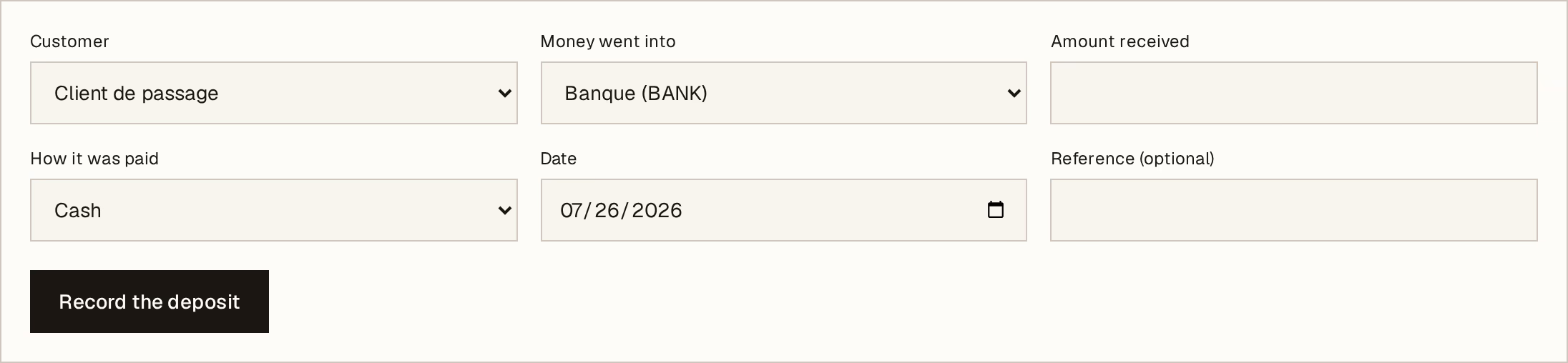
What to look at:
Customer — who paid.
Money went into — the cash, bank or postal account it landed in. This is a real treasury movement: the cash position goes up immediately.
Amount received — what they actually handed over.
Date — when it arrived.
How it was paid and a reference sit alongside. Press Record the deposit.
The customer's account now shows a credit. Your cash has increased and your income has not, which is the honest picture of holding somebody else's money.
Apply it when the invoice exists
Later, when you have written and confirmed the invoice, come back to the deposit and choose Put against an invoice. Pick the invoice, then Use.
The credit moves onto that invoice and reduces what is left to pay. If the deposit covered the whole amount, the invoice is settled outright.
You can apply part of a deposit, and one deposit can settle more than one invoice — a customer who pays a lump sum against several jobs is a normal case, not a special one.
Why not just record it as a payment
Because until the invoice exists there is nothing to pay. A payment has to attach to something, and recording one against an invoice you have not written yet means either inventing the invoice early or leaving the money floating in your cashbook with no explanation.
There is also a tax reason, and it is the one that matters: a deposit is not a sale. Booking it as income puts VAT into a period where no supply has happened. Holding it as a credit until it is applied keeps the VAT with the invoice, where it belongs.
A deposit is money already in hand. A post-dated cheque taken as a deposit is still a promise — record it in the cheque register and take the deposit when it clears.