All guidesDistribution
Close a round and count the bag
End the day by counting the cash the driver brings back against what the stops say was collected.
- Steps
- 3 · About 2 min
- Who can do this
- Owner · Manager · Team member
- Needs the module
- Distribution
Before you start
Closing a round is the moment the van's day is reconciled: the cash the driver hands over, against the cash the stops say was collected at the doors.
Do it the same day, with the driver still there. A difference found the next morning has nobody left to explain it.
Answer every stop first
A round with a stop still unanswered cannot be closed. That is deliberate — the bag cannot be checked against the doors until every door has an answer. Work through the stops first.
Count what came back and close
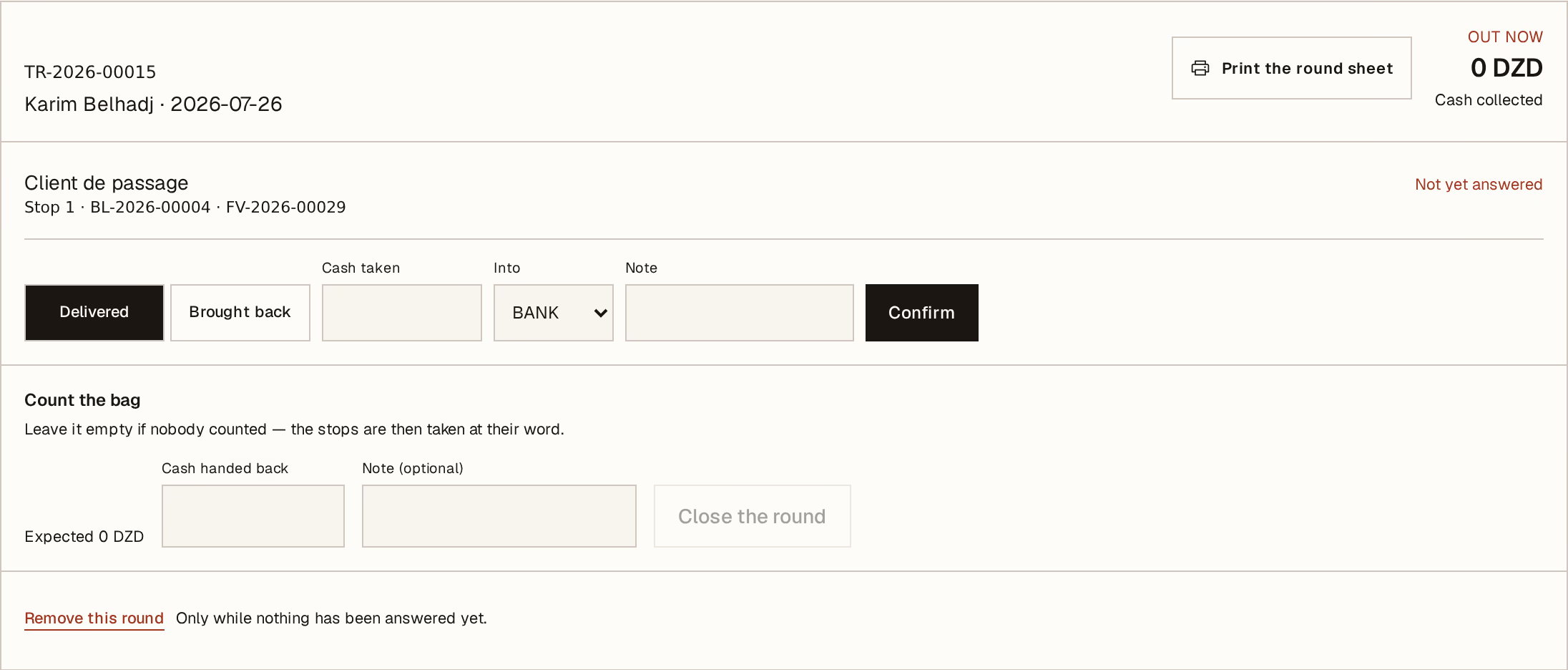
What to look at:
Cash handed back — count what the driver actually gives you. Leave it empty if nobody counted; that is recorded honestly as uncounted rather than as a shortfall of everything.
Note — where the explanation goes. "Customer paid by cheque, in the folder" written now is worth more than the same fact remembered in March.
Close the round ends it.
Read the difference
The result names three numbers: what the stops expected, what was handed back, and the difference — short, over, or "Bag matched the stops."
A shortfall is not automatically a missing note. The commonest causes are a customer who paid by cheque while the stop was recorded as cash, and a driver who paid for fuel out of the bag. Both are findable the same evening and neither is findable a month later.
A closed round stays readable: its stops, its cash, its driver. It is the record of what that van did that day.
A round loaded by mistake — one that never went out, with every stop still unanswered — is removed, not closed. Removing it puts the delivery notes back in the pool for another van. Once a round has been out and a stop has been answered, it is closed instead, because something real happened and the record has to keep it.