All guidesMoney
Record money in or out
Enter cash that moves for a reason no invoice covers — rent, fuel, bank fees — and pay supplier invoices.
- Steps
- 3 · About 2 min
- Who can do this
- Owner · Manager · Accountant
- Needs the module
- Money
Customer payments go on the invoice. Supplier payments go on the supplier's invoice. This screen is for everything else — the money that moves without a document of its own.
Rent, fuel, bank charges, a capital contribution, a refund. If it left the drawer or landed in the bank and no invoice explains it, it belongs here.
Open Finance
Finance in the sidebar shows your cash position, the cashbook, and what is owed in both directions.
Enter the movement
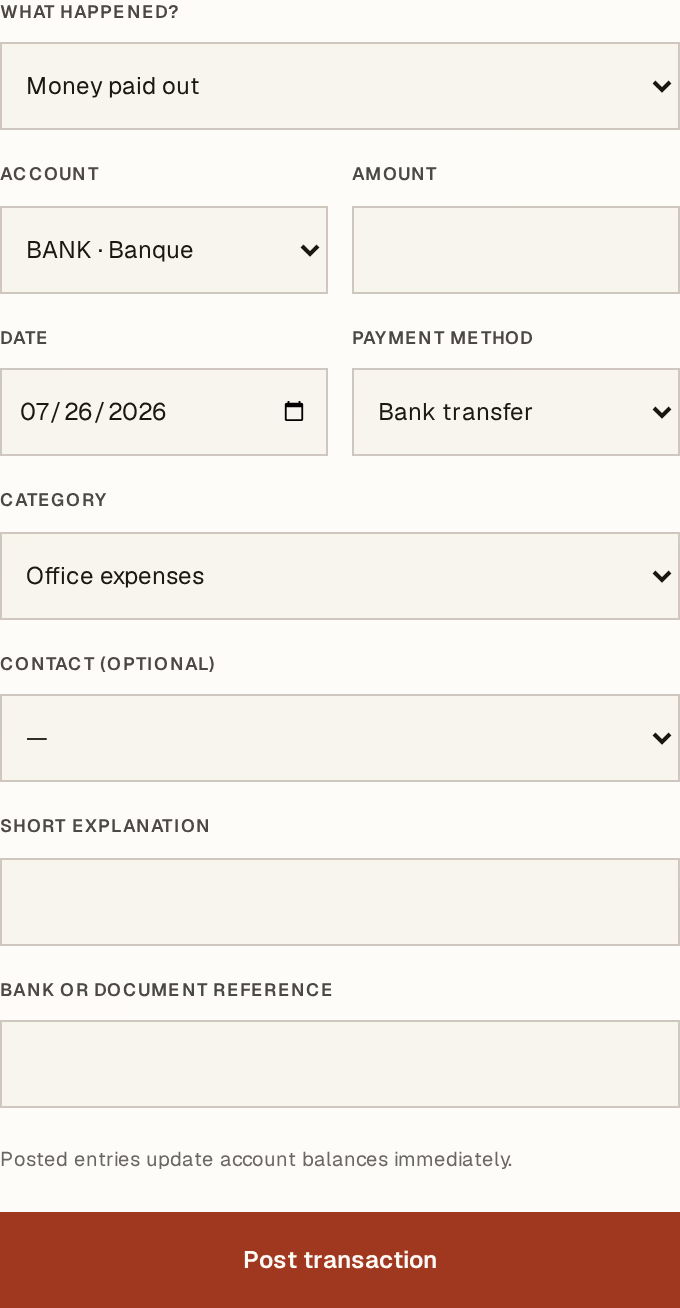
What to look at:
What happened? — three kinds:
Money paid out — an expense.
Other money received — income that is not a customer invoice.
Pay a supplier invoice — which then asks which invoice, and settles it. Use this rather than recording a plain payment out, or the supplier's balance will stay open while the cash has gone.
Amount — what actually moved.
Category — Rent, Utilities, Transport and fuel, Office expenses, Bank fees, Payroll, Taxes and duties, and the rest. This is what turns a cashbook into something you can read: categorise as you go and the year-end tells you where the money went, guess now and it never will.
Post transaction records it.
Choose the cash account it moves through, the payment method, the date, and put something useful in Short explanation. A contact can be attached where it makes sense.
Read the cashbook
Every movement lands in the cashbook below with its category, account and balance, alongside the payments taken on invoices. One list, in date order — there is no separate ledger to reconcile against this one.
The accounts panel above shows what each cash, bank or postal account holds right now.
A payment entered wrongly is corrected by reversal, never by editing. Use Reverse payment on the line, give a reason, and post the right one. The original stays visible marked Corrected, and the cash, any linked invoice balance, and the accounting entries all move back together.
That is also why the cashbook can be trusted: nothing in it has ever been quietly changed.