All guidesSet up your company
Set regional and fiscal defaults
The company's own language, its timezone, and the tax regime it files under.
- Steps
- 3 · About 2 min
- Who can do this
- Owner · Manager · Accountant
Three settings that decide how this company behaves by default, in Settings, section 04.
The three you set
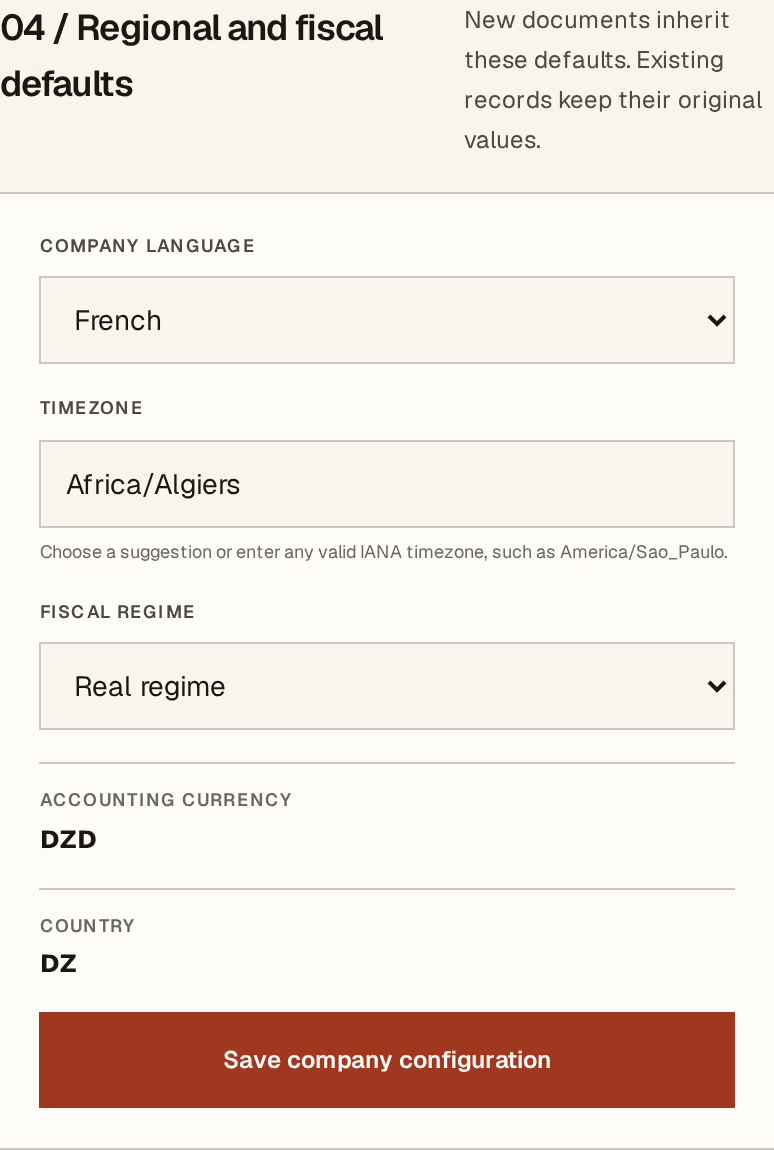
What to look at:
Company language — the language of the company's own documents and defaults. This is not the language you personally read the ERP in; that is yours to switch whenever you like, and it does not change this.
Timezone — Africa/Algiers for an Algerian business. Any valid IANA name is accepted, so a company operating elsewhere can say so. It decides what "today" means for a till session, a delivery round, and a dated document.
Fiscal regime — IFU, simplified real, real, or custom / international. This is what you actually file under, and getting it right matters more than anything else on this screen.
Accounting currency and country are shown but not editable. They are fixed when the company is created, because changing the currency of a company that already has posted entries would make every historical figure ambiguous.
What "default" means here
New documents inherit these settings. Existing records keep their original values.
That is deliberate and it is the whole design. Change the timezone in June and May's till sessions do not move; change the fiscal regime and last quarter's declarations are not rewritten. A setting describes what happens next, not what already happened.
If you need a past document to be different, correct the document — corrections are reversals — rather than changing a setting and hoping it reaches backwards.
Why the fiscal regime matters
It drives how tax is applied and what your VAT position looks like when you check it before the G50. A business on IFU and a business on the real regime do not owe the same thing on the same sale.
Set it before you raise documents, not after. If you are unsure which one you are on, your accountant knows, and it is a two-minute question that saves a quarter of unpicking.
These are per company. In a group, each entity carries its own regime and its own timezone — which is right, because they are separate legal persons filing separately. Setting one does not set the others.
Next, you might want to
- Fill in your company's legal and fiscal identityEnter the identifiers that print on every document, and set the language, timezone and tax regime the company works under.
- Check your VAT before preparing the G50Reconcile the VAT your documents say you owe against the VAT actually posted, and clear the exceptions before you file.
- Switch languageMove the whole workspace between Arabic, French and English — and know where the control actually is.